

- Mark Ranola
You will have heard through national media and the election campaign that there are to be 20,000 additional police officers, which of course is welcome news, but what will it mean for our communities?
In this two-part article, I will explain one benefit, which is Problem Orientated Policing. In the second part, I will write about recruitment, because there are excellent opportunities for people to become a police officer and to gain a degree in policing too.
Problem Orientated Policing is not a completely new term, nor is it a new way of policing – it is something that has been largely missing through the severe cuts in police numbers that we have seen up and down the country through a lengthy period of austerity.
So, what is it? In simple terms, it describes any problem within a community which the police and partner agencies work to reduce or resolve.
I have used the word `reduce` quite deliberately, because in reality, it is not possible to resolve all issues completely, but by reducing them to an acceptable level is better for a community.
Problem Orientated Policing is something which Neighbourhood Police Units deal, however, they can be supported by the response units too during patrols.
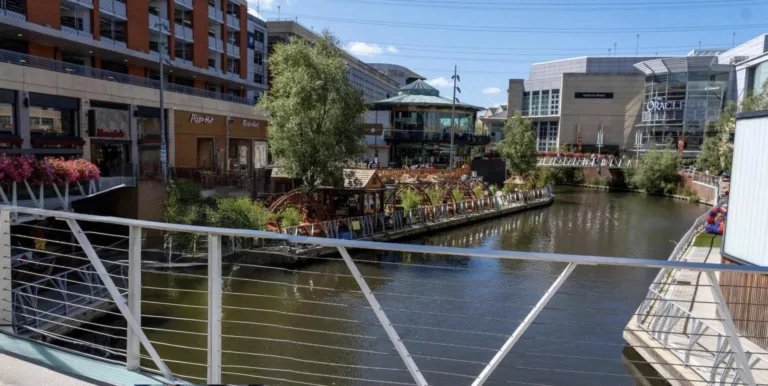
Examples where Problem Orientated Policing can be used are youths causing anti-social behaviour, theft and assaults in a retail shopping park, or a home used by drug addicts, where there is anti-social behaviour, noise and drug use.
There are many more examples I could give, but the above are quite typical problems in all communities and it has an adverse effect on the quality of life.
Problems such as these are not for the police to deal with alone – they will require a partnership approach, often involving members of the community too.
In simple terms, Problem Orientated Policing will only apply to an issue where there is a need for a partnership approach, otherwise it will not apply, because these problems are those that the police know about through their patrols and intelligence and most importantly, the community are reporting and expect a response.
How does it work? Firstly, once a problem has been identified, the relevant organisations will get together to discuss it and begin to develop a working strategy to reduce or resolve it. In this initial meeting, representatives will share data to see what the problem is and what types of crime or anti-social behaviour exist. They will also look at the impact to the community and what risks and vulnerabilities there are. This first meetings will seek to agree a commitment, which will include resources and money.
The next stage will be to look more in-depth at the problem. This will include identifying victims, offenders, the number of reports, what crime types exist and the causes of the problem.
Following this will be the response, which usually involves targeted patrols, robust action against offenders and a sustained approach to this in the initial phase, because it is important to bring the problem down to a more manageable level first, before other work can commence.
By a robust approach first, this will seek to remove the main cause of the problem, which will be the main offenders quite often, which should result in an initial drop in incidents.
Once a problem is better contained and managed, it becomes possible to work on the solutions; In the two examples I have given, these may include lighting, improved CCTV and short to long term security staff for the retail park. In the case of the home, the warning of eviction (if tenanted) or temporary closure notice may be done, whilst further solutions are worked on.
Problem Orientated Policing has not stopped during the austerity period, but it has been more difficult to achieve, due to deep cuts, so it become harder to work in a sustained and co-ordinated way.
The increase in police numbers and in other agencies, will allow partner agencies to work together more effectively, however, the additional resources are being phased in over three years, involving a training period before officers become effective, so there will be no quick fix, but it is encouraging to know that the future should look much better.
New police recruits will be trained during a two or three year period in both response and neighbourhood teams, so this will mean that each department will benefit directly, since under the old method, police recruits went straight to response and they would usually come to neighbourhood police units after a two year probation.
I mention that training will be over two or three years – this is because there are now three different routes into policing and depending on someone`s qualifications, this will involve different periods of training. More on this next week.
Namaste.
PC 1860 Mark Ranola.
Yateley Police Station.
101 (mark.ranola@hampshire.pnn.police.uk)