


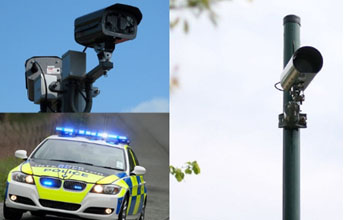
The borough`s of Rushmoor, Hart and Basingstoke and Deane are close to the borders of both Surrey and Thames Valley Police, therefore when organised crime happens in one of these Hampshire borough`s, it is quite usual for it to happen in the bordering police force areas too, so this has led to a close co-operation of all 3 police forces in sharing information and responding jointly to crime patterns.
Hampshire and Thames Valley police forces already share many resources, such as Roads Policing (traffic) Firearms and Dog Section, to name some, so there has long been in place a close collaboration between both police forces.
Last week I wrote about how crime impacts people and I gave examples of theft from vans and outbuildings, where tools and equipment used by tradespersons was stolen.
When these types of crime occur in the borough`s mentioned above, Hampshire police will share information with both Surrey and Thames Valley police to identify crime patterns, which will include locations, day`s and time and what items are being stolen.
The location will not only look at where crimes occur, it will look at specific things, like car parks of hotels and sports centres, building sites or private homes.
Methods are also analysed to look at crime methods and this helps to target police resources in the right areas to respond to crime patterns to both catch and prosecute offenders and deter them.
Criminals will prefer to operate in a certain way and the methods they use to commit crime and the type of items they steal will help to identify who may be responsible.
Proactive police work, together with covert patrolling will help to confirm which vehicles criminals are using and it is with this information that the police can be a step ahead in pro-active operations, where the use of existing Automatic Number Plate Recognition Cameras (ANPR) and mobile ANPR will alert police to criminals passing certain locations, where they can be intercepted and searched.
It may not always be the case that criminals will have stolen goods when stopped, however, they will be aware that police are responding to them which has the deterrent effect I mention, so this has a positive result, although to catch criminals in possession of stolen goods is of course a preference, where prosecutions will follow.
Technology is increasingly being used to combat crime, where mobile phones are examined which help to place criminals in certain places at certain times through data from mobile phone masts.
This helps where someone is arrested for a crime where similar crimes have occurred elsewhere, and it will prove a person`s location and link them to a crime. It will also help to show where they have been so that suspected stolen goods can be matched to areas, leading to the owner identifying it and proving that the items were stolen.
This article may give the impression that pro-active policing is relatively simple because there is only limited space to write, however, the reality is that long hard hours are put in behind the scenes, including surveillance and the use of crime analysts. In addition, the investigation processes now used to secure prosecutions is quite technical and takes skilled people and time.
However, if you reflect on some of what I wrote about last week and the impact that these criminals have on people and their ability to work and hence, income, it is both necessary and rewarding.